What to Do If You're Caught Outside in a Sudden Gale
The forecast said “windy”. Then a squall line crossed the ridge and the wind went from nuisance to something that shoved you sideways in the time it took to zip up your jacket. Sudden gales usually arrive like that: not as a slow build, but as a gust front, a squall, or a funnel of accelerated air between buildings or through a gap in the hills.
Gale force is force 8 on the Beaufort scale, and it begins at around 39 mph — strong enough to make walking difficult, snap dead branches and turn anything loose into a missile. The first minute matters most. What follows is how to handle it on foot, on two wheels, or on site.
Stop, get low, and read the situation
Fighting a gale upright is how people get hurt. Your centre of gravity is high, your coat is a sail, and a gust can take a foot out from under you on wet tarmac. Get low before you get moving.
- Widen your stance and soften your knees. Crouch slightly, keep your hands free, and take short deliberate steps rather than long strides into the wind.
- Work out the direction. Is it steady or gusting? Gusts come in cycles, and the lulls are your window to move somewhere better.
- Look up, not just ahead. Roof tiles, glass, hanging signs, scaffolding netting, dead branches and overhead cables are the things that actually injure people in a gale.
- Decide early. Turning back five minutes into a squall is far easier than turning back half a mile later on an exposed ridge.
Find shelter that won’t fall on you
The instinct to duck under the nearest big tree is understandable and often wrong. In a gale, trees shed limbs, and the ground beneath them is the one place you should not be. Aim for solid, low, immovable things: the leeward side of a stone wall, a bank, a hedgerow, a shipping container, a solid building, or the sheltered flank of a vehicle.
On a hill or open moor
Get off the tops. Ridges, summits and the mouths of gullies all accelerate wind, and a col between two peaks can behave like a funnel. Drop down the leeward slope, even by a hundred metres of height — the difference in comfort and control is often dramatic. Avoid the edges of crags and cliffs when visibility is dropping; in a gale, a navigation error becomes a serious one quickly.
In town or on the street
Buildings create their own weather. Corners, alleyways and gaps between tower blocks can produce gusts stronger than anything on the open forecast, and they arrive with no warning. Keep clear of glass frontages, market stalls, temporary fencing and anything on wheels. If you can step inside a shop, station or café, do it and wait ten minutes. Gusts rarely sustain their worst for long.
On foot: change the plan, not just the pace
If you are walking, the priority is to get out of the exposed ground rather than to complete the route. Bin the summit. Take the lower path. Accept the detour.
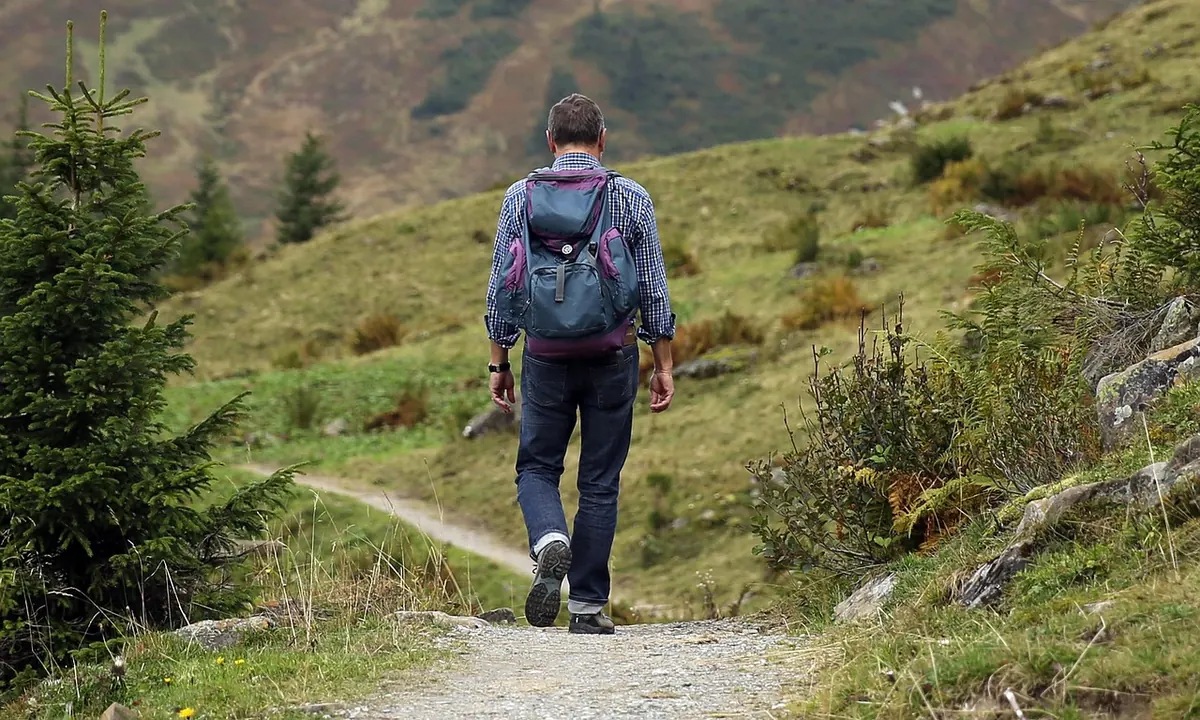
Keep a group together and keep it tight — it is much easier to account for four people in a huddle than four strung out along a ridge. Tighten rucksack straps so the load stays close to your back, put on a waterproof shell before you get cold rather than after, and add hat and gloves: wind chill strips heat far faster than temperature alone suggests.
If you meet a stile, gate or kissing gate, avoid the temptation to pause and chat. Move through one at a time and keep moving. On wooded paths after a gale, expect debris and half-hung branches overhead; on riverside routes, expect the water to have risen.
On a bike: the gaps are the danger
Two wheels and a side gust are a poor combination. If the wind is strong enough that you are steering into it just to hold a straight line, get off and walk. There is no shame in it, and exposed bridges, viaducts, coastal roads and high moorland routes are genuinely dangerous in a gale.
Watch for the places where shelter ends: a gap in a hedge, a junction, a lay-by, the moment a high-sided lorry passes and then clears you. Each one delivers a sudden shove exactly when your attention is elsewhere. Deep-section rims and disc wheels make this worse. Brake earlier on wet leaves and gravel, keep a firm but relaxed grip, and give yourself more room from the kerb.
Working outdoors: secure, stop, check in
Most sites, farms and maintenance crews operate to a wind threshold for lifting, working at height, crane operations and anything involving sheeting or boards. Follow the site rule; do not improvise because a job is nearly finished. A gust does not care about the schedule.
Before the worst arrives, walk the area and secure what could fly: cones, boards, ladders, bins, signs, tarpaulins, empty drums, loose tools. Anything that becomes airborne is a hazard for someone else. Stay well clear of downed overhead lines and assume they are live — report them, do not touch them.
If you work alone, set a check-in schedule with someone and stick to it. Tell them where you are, what you are doing and when you expect to be finished. If the wind is beyond what your risk assessment covers, raise it with your supervisor rather than working around it.
If it goes wrong
Being blown over, hit by debris or caught in falling branches is the moment to slow down and think in order:
- Check yourself first. You cannot help anyone if you are unsteady on your feet.
- Move only as far as you must. If someone has a suspected head, neck or back injury, do not move them unless they are in immediate danger.
- Shelter and warm up. Wet plus wind causes rapid cooling. Get out of the wind, add layers, insulate from the ground, and share body heat if needed.
- Call for help. In the UK, dial 999 or 112. For a hill incident, ask for the police and then mountain rescue. Give your location precisely — a grid reference, a what3words address, or a clear description of a landmark.
- Conserve your phone. Keep it dry and warm, and put it in low-power mode. If you cannot get a signal, make yourself visible and audible: bright clothing, torch, whistle.
This is general guidance, not a substitute for proper first aid training. If you spend time on hills, coasts or remote sites, a recognised outdoor first aid course is worth the day it takes.
The three things to remember
Get low, get out of the wind, get help if you need it — in that order. Before you set out, treat the word “gale” in a forecast as a plan-changer rather than a detail, check the gusts as well as the average speed, and tell someone your route and expected return. A sudden gale is survivable and manageable. It just needs you to stop, think, and give up on the original plan quickly.
Photo: Hermann / Pixabay

You Might Also Like
A practical guide to building a personal severe weather watch routine: checking forecasts, setting useful alerts, and writing a simple trigger plan before the storm arrives.
UK wind records are messier than they look. This explainer covers what the data can and cannot tell us about wind trends, and why weather is not climate.